With the economy lousy and the fact I barely went out this hunting season, I've been dreaming of trips past. I remembered I'd posted a trip report on a local forum years ago. I figured I'd repost here just in case it ever gets erased from that forum.
This trip occurred in September of 2006. This was my second trip to Costa Rica and the first time landed a tarpon. I didn't mention how many I landed that trip on the report but if I recall correctly it was four. Ranging from 110 lbs to 150lbs.
From the forum back in 2006:
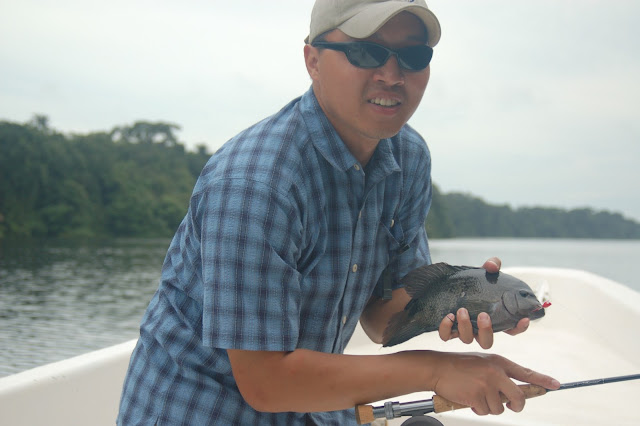
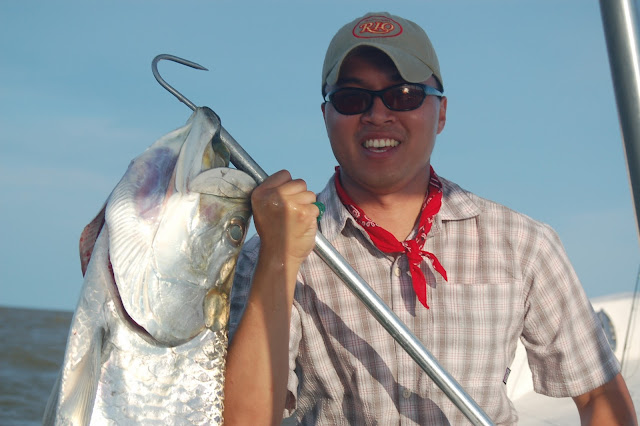
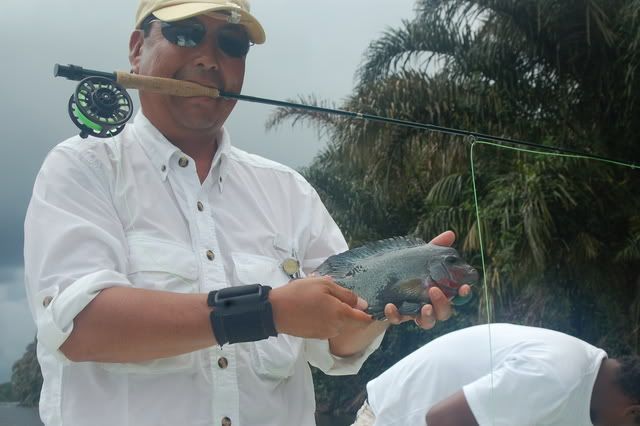
I thought I'd share our fantastic Costa Rican trip. Bryan Webb, myself and company just got back from Casa Mar for some Poon fishing. The trip was truly epic and everyone got multiple shots at them. We managed a mixed bag of Tarpon, Barracuda, Jacks, string ray, ribbonfish, bluerunners, and a mix of jungle fish-snook, machaca, mojarra, tigerfish, a guopote. Here are some pics. Enjoy:
My first fish, I thought it was a tarpon when it jumped. I had no clue that Cudas did that. I did find it strange why it was so easy to reel in:
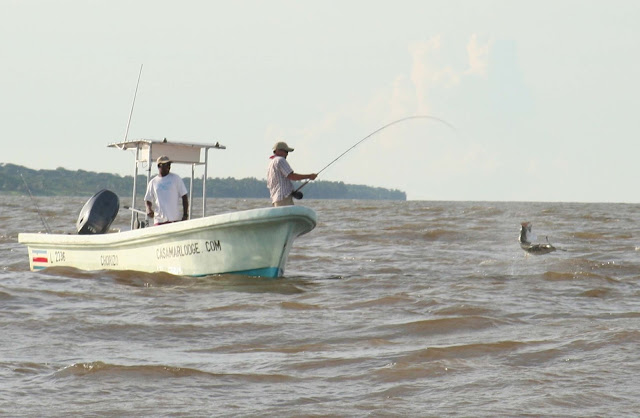
My first Tarpon:
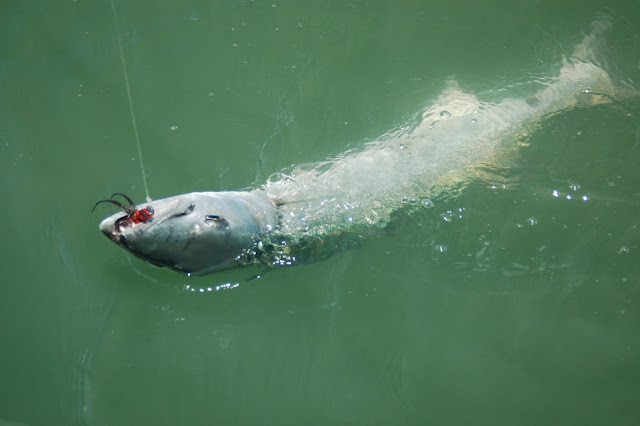
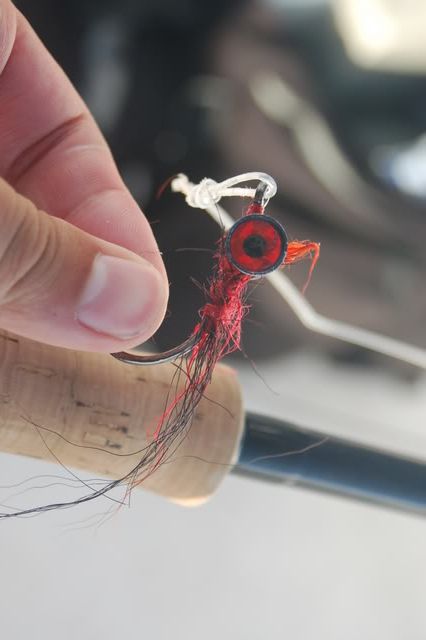
My CR Whistler. The result of an angry tarpon:
Jumping Poon:
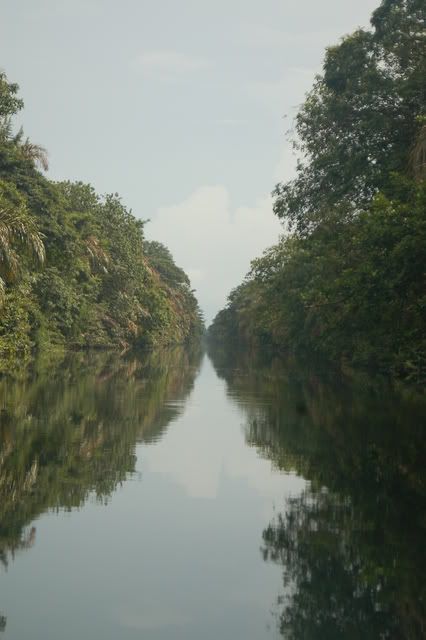
After fighting several poons I was ready to hit the jungle. I actually prefer fishing there. For one it is beautiful and it is more interactive. Rather than jigging blindly for tarpon you actual have to make good casts and place your shots.
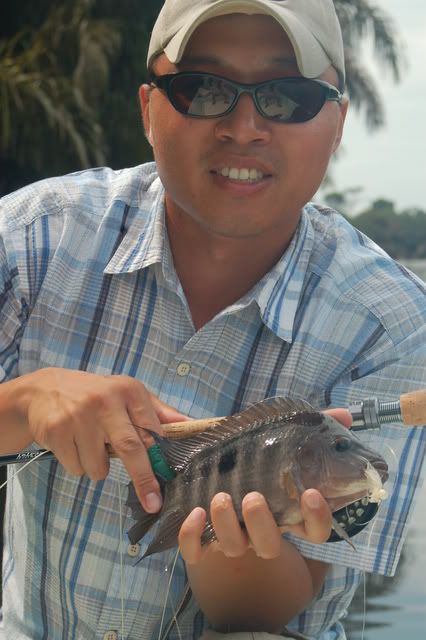
Emerson with his Machaca, a fun game fish that makes multiple jumps and has sharp teeth.
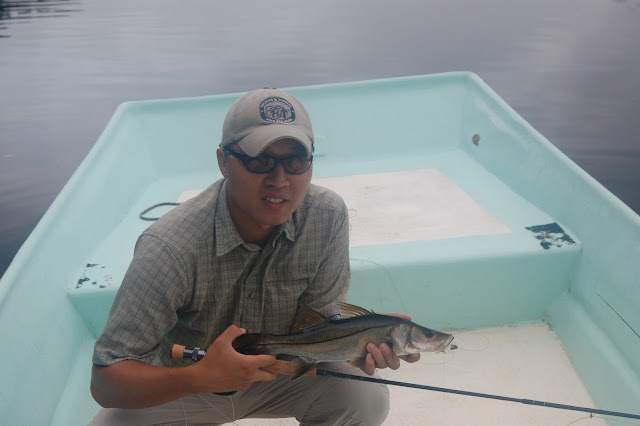
One of my several snook (if you notice I did get my T&T 5wt back in time for this Trip. Thank you T&T repairs!)
Emerson with a mojarra, a bluegill looking fish
My mojarra, the guide said that this one was a "true" mojarra (whatever that means, you can tell the difference from Emersons).
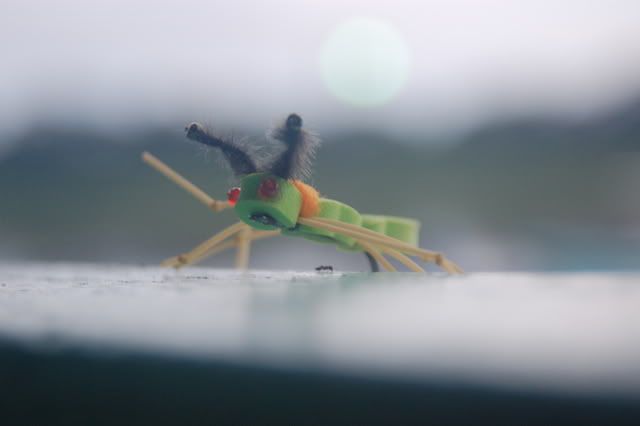
Brian and I managed to fish the jungle on the last day. Brian did invent a gurgler derivative fly that I must say is the best popper fly I have ever fished. It is multiple flies in one, part popper, part wiggler, part streamer. It is truly amazing. I will be fishing it more often here locally for Bass. I only regret not bringing more that two to CR.
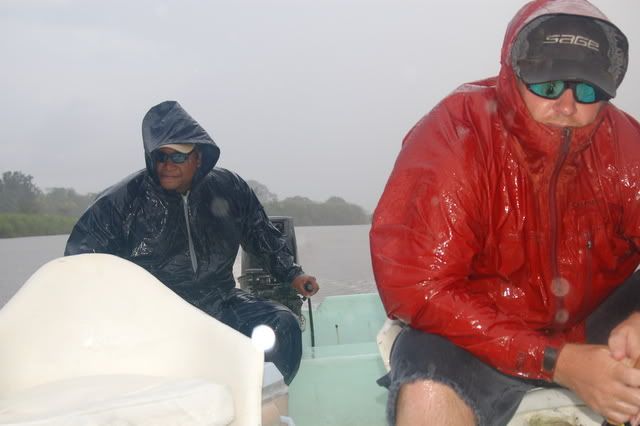
After sometime in the water we got pounded by the rain
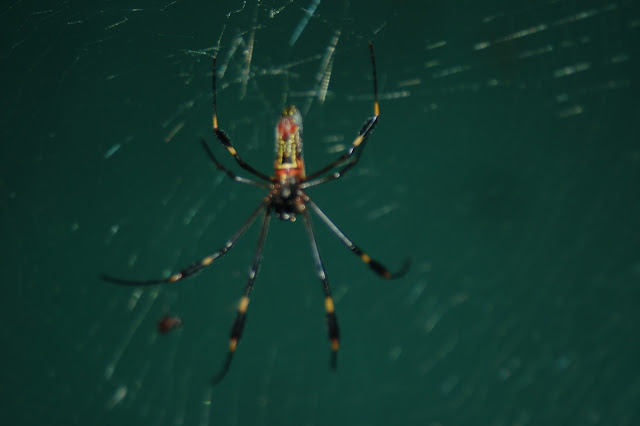
Here is some misc pics:
The trip was made great not only by the great fishing but the company. Fishing with great people make great fishing trips.
More pics that didn't make the original post:


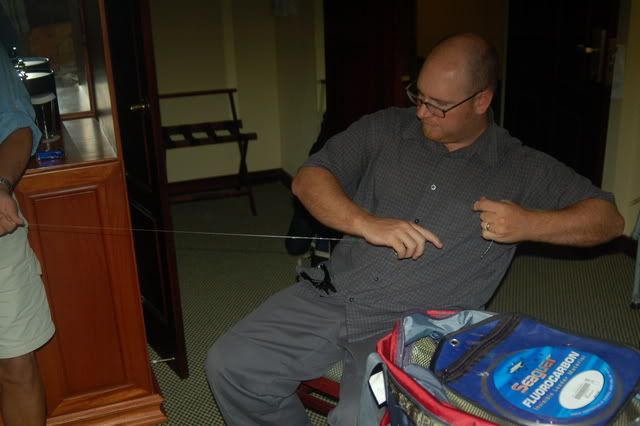



Lunch at the Hotel Hurradura in San Juan on the first day:
 Seabass cerviche

Great octopus, very tender Downtown San Juan


The next day on our way to the jungle


Arrival at the jungle airport

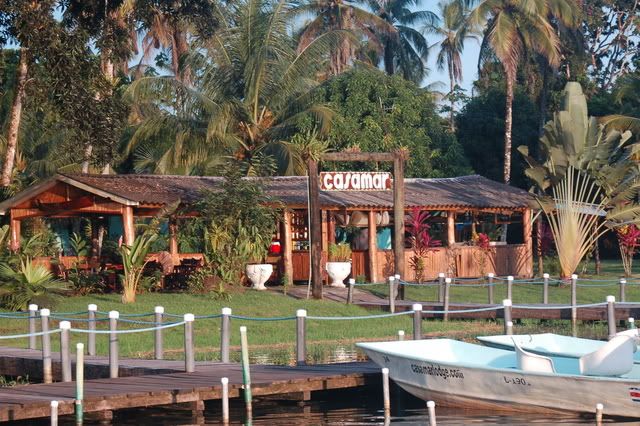
 Boat ride to Casa Mar


Some lobster at Casa Mar, Thanks to Webb
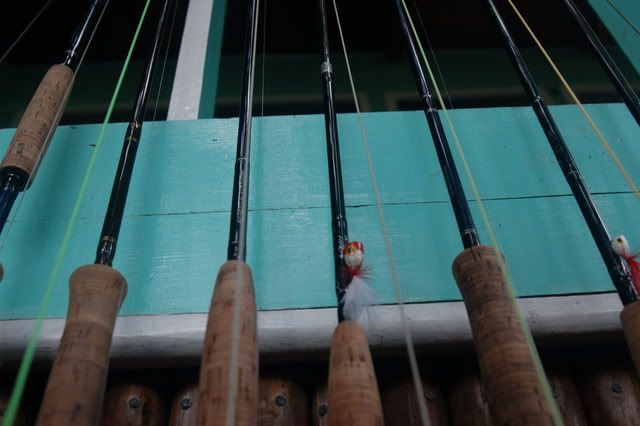
 Flies for the jungle and Tarpon offshore

The smallest of all the Tarpon I caught

 Snack of shrimp cerviche at the lodge

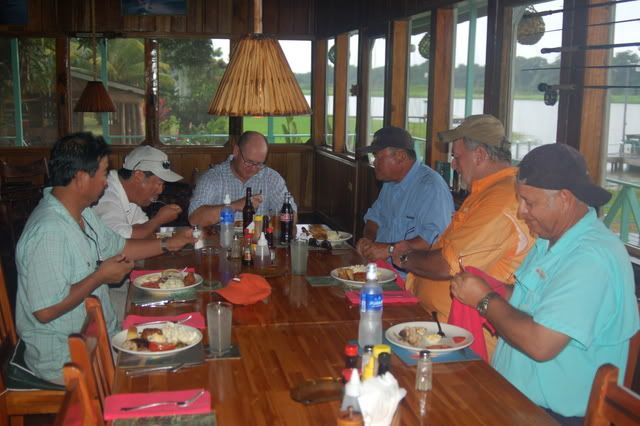
Lunchtime at the lodge
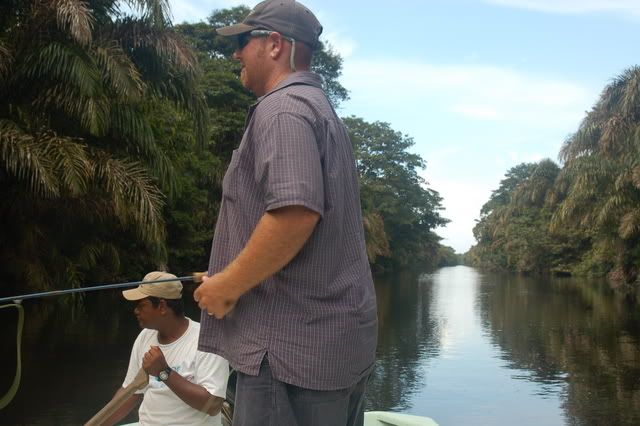
 Jungle fishing for Snook, Guapote, Machaca, Mojarra and such or monkey watching. All top water fishing

 Don with evidence of his first tarpon. Guides take one scale from your first catch. I still have mine.

Emerson and I doing some jungle fishing.

 Caiman.
 Jungle traffic jam. Yield to crossing cattle.
 On our way home was a little wet.
 Waiting at Terminal C.

 Last meal in San Juan.

I found my notes the other day when I was in my tackle bag:
Arrived in San Juan. Doug, Don and I chose to check out the city while the others took a nap at the hotel. Had lunch at the hotel. I don't blame them our flight was a late one. We checked out a local cigar maker, a shopping center and an outdoor swap meet. Came back and had dinner at the Japanese Benihana style restaurant compliments of Bill and Richard.
Guide Mario.
Day 1
Morning: Barcacuda orange and Black CR Whistler
Afternoon: 80lbs Tarpon Org/Blk CR Whistler
120lbs Tarpon Chart/Blk CRW
90lbs Tarpon Chart/Blk CRW
Day 2
Morning: 80lbs Tarpon Org/Blk CRW
Stingray and Ribbonfish
Afternoon: Jungle Fishing. Over 10 Mojarra on a red popper. Small Jack Crevalle and Sardine.
Day 3
Morning: Fished the Jungle starting with a red popper. Multiple mojarra. No luck with
Gurglers or frog patterns. Changed to Webb's popper and caught snook,
mojarra, machaca. Moved to the ocean late morning. No luck.
Afternoon: Fished with Neil from Texas who just arrived. Fished the ocean with no luck.
Day 4
Morning: Fished with Emerson, using webb's guide Manuel, in the Jungle for Machaca on the main river. Drift the boat downriver. No luck so tried to mojarra in the channels. Fished with Webb's fly. Took several mojarra. Then caught a snook that frayed the line. I was lazy and did not change the leader. Eventually hooked a bigger snook that cut the line and I ripped it out of its mouth. I tied on the last Webb's fly I had. Stupidly I tied on a 7lb leader, much too light. I hooked a good size machaca and got it near the boat. It jumped several times until it cut the line with its teeth right at the loop knot.
Afternoon:Fished with Webb. Rained like crazy. We tried our luck at Guapote. Several small strikes taht the guide believe most likelt Mojarra. Went to fish the same laguna that Mario had me fish. Webb several mojarra and bluegill. I only hade a mojarra on the last cast of the day. Guide Manuel made sure I had at least one for the afternoon.
Day 5
Travel day to San Juan to wait for our flight. The boys managed to get a hotel room until our evening flight. I was not feeling well so I napped while they went to visit a local mountain. The later told me it was freezing cold.